IHT: Musharraf quits as Pakistan’s president
I wrote last week about what a resignation by Musharraf would mean for the U.S. and our Afghanistan policy. This week, from a different perspective: the perspective of India.
Background
India has recently seen an upturn in the amount of violence in Jammu and Kashmir. The territory is disputed between Pakistan and India – three wars have been fought over it, as well as both sides gaining nuclear weapons in the 60 year conflict. Some in the India-administered Kashmir would like to secede from India and join Pakistan, and vice versa. Recently, Muslims in Indian administrated Kashmir have increased protests. During some of these protests, a handful of protestors have been killed by Indian police. The protests rage on today.
A power vacuum
India worries that with the resignation of Musharraf, there will be a power vacuum in Pakistan. That is very legitimate concern. It is likely the next elected president will be weak, at least temporarily if not permanently, and the Pakistani parliament is likely to break down into its feuding factions: the PPP (the party of Benazir Bhutto), the PML-N (the party of Nawaz Sharif), the Islamists, and everyone else.
None of these parties is particularly competent; most all are corrupt. Corruption, however, is not India’s worry. India’s worry in the executive and legislative branch is Islamic fundamentalists. They could very much endanger stability and the peace process. As well, India has no one to talk to that would be in complete control.
Yet, there is one larger worry: the powerful army and the Pakistani intelligence service, the ISI. The army helped fund militants in Kashmir that sparked the 1998 almost-all-out war between Pakistan and India. The ISI has always trained militants as well, and is believed to have been involved in the recent bombing of the Indian embassy in Kabul.
The last comment I have is this: the U.S. and India still have ongoing talks about a nuclear power deal for India.
Monday, August 18, 2008
What Musharraf's Resignation Means for India


Friday, August 08, 2008
Musharraf Impeached: A New U.S. Policy for Pakistan
Note: this article was written semi-in a rush, because of the fact that in the middle of writing the article, news of war in South Ossetia broke out
Reuters: Pakistan coalition to move to impeach Musharraf
Background
Pakistan is split between four factions:
1. The ISI (the Pakistani CIA)
2. The army/President Musharraf
3. The PPP (the party of Benazir Bhutto)
4. The PML-N (the party of Nawaz Sharif)
The army, the PPP, and the PML-N have all been in control at one time or another in the past 20 years. All have been relatively ineffective and corrupt. The current alliance is the populist PPP and PML-N in the parliament against the U.S. supported President Musharraf. The parliament made a truce with terrorists who live in the largely unregulated North-West Frontier Province (NWFP). The truce was what the majority of Pakistanis wanted, but neither the U.S. nor Musharraf supported it. The truce has since broken down almost completely.
Now, the PPP and the PML-N in parliament is trying to impeach Musharraf.
Consequences
The first, most obvious consequence of the impeachment will be further destabilization of the region. With the situation in Afghanistan at the point that it is, the impeachment should be of grave concern to the West, and America especially. Furthermore, the destabilization will not be limited to just Pakistan and Afghanistan: it will affect the Middle East as well.
Other than destabilization, the other (more) serious consequence of the impeachment is the affect on the War on Terror. Al-Qaeda and the Taliban already operate out of the NWFP in Afghanistan at will. If Musharraf is taken out of office, it can be assured that the new president will be softer on terror, which is exactly what we DON’T need right now.
Luckily, it is unlikely the impeachment will be successful. However, Musharraf has said before that he would step down if impeached. Hopefully he will not follow through with that statement.
U.S. policy
None of this should have happened. We should never have relied so heavily on an ineffective dictatorship. This is the price we have to pay. Lessoned learned: don’t cozy up with dictatorships.
The good news is that this could be helpful in the long term. It could stop a lot of potential terrorists from becoming terrorists by (a) defusing anti-American sentiment and (b) having the potential terrorists feel like they have a say in their government. Alternatively, it could not. The brief spike in terrorist activity could outlast the long term effects mentioned above.
Non-military aid
So, what should U.S. policy be? No matter who is in power, there is one simple effective step that can be taken: reorganizing aid to Pakistan. Islamabad has squandered billions in military aid. Over $7 billion in aid has been ineffectively used in the fight against terrorists and the rest has been spent on buying next-gen fighter planes for use against India.
A better use for aid would be in infrastructure: building roads, schools, hospitals, electrical lines and water lines. Of course, military aid would still most definitely be necessary. However, American aid to Pakistan needs to be more for the people of Pakistan, rather than the Pakistani military.
Tuesday, June 24, 2008
Prisoner Swap with Hezbollah, Truce in Gaza - Rumblings in the Middle East
CNN: Israeli Cabinet to consider swap with Hezbollah
BBC: Rockets ‘violated Gaza ceasefire’
Reuters: More indirect Israel, Syria talks in July
Background
Israel has been negotiating on two and a half fronts recently. The first front is in the Palestinian territories, but specifically with Hamas in Gaza. The second and a half negotiations were with Hezbollah/Lebanon along with Syria.
Negotiations with Hamas have been ongoing since the 2006 abduction of Israeli soldier Gilad Shalit and after the 2007 coup in which Hamas ousted its rival Fatah and took over the Gaza Strip. The eventual result was a ceasefire for Gaza which began Thursday. No one expected the truce to last long, however. That assertion was only confirmed today when Islamic Jihad militants launched rockets into southern Israel in retaliation for an Israeli air strike in the West Bank, which, if you don’t remember, is not part of the truce.
The second front has been much more interesting, not to mention more peaceful (albeit just for now, but we’ll get into that later). Israel and Syria have finally gotten around to having negotiations over the disputed Golan Heights that Israel captured in the 6 Day War. The talks, which are being mediated by the Turks, have not been completely endorsed by the U.S., which has complicated things, and even led one Israeli general to declare that there will be no deal with Syria until George Bush is out of office.
On the other half of that negotiating front is Lebanon and Hezbollah – Israel has opened up negotiations with both. Why include Lebanon/Hezbollah and Syria together? There can be no peace between Israel and Syria without involving Lebanon and Hezbollah, and there can be no peace between Israel and Hezbollah without involving Syria. Besides, Syria still has de facto control over many parts of the country. This is for many political, religious, and economic reasons, but it is also because Syria has a big hand in the actions of Hezbollah. Well, it appears Syria has given the go ahead for some peace between Israel and Hezbollah: a prisoner swap. Two soldiers captured in 2006 by Hezbollah would be traded for a rumored five Hezbollah guerrillas.
So, to sum up an unnecessarily long background:
- Israel is negotiating with Hamas for peace in Gaza and the return of a captured soldier
- Israel is negotiating with Syria over a peace agreement on the Golan Heights
- Israel is negotiating with Hezbollah, which is supported by Syria, for the return of two captured Israeli soldiers
Peace in Gaza
One thing not mentioned above was the almost imminent incursion that would have surely taken place if it hadn’t been for the ceasefire. Rocket fire had gone on for far too long without the Israeli government truly responding for most Israelis tastes. Therefore, Israel should take this truce as an opportunity to do three things: (a) prepare its military, if necessary, for an incursion; (b) bolster Fatah in the West Bank; (c) open up final peace negotiations with Hamas. If those negotiations failed, and rocket attacks resumed, options a and b would be ready for retaliation against Hamas
Peace in Lebanon
The prisoner swap should go through, and the United States needs to endorse a peace deal between Syria and Israel. Peace is in the interests of all the above countries – Israel would like peace and its ruling politicians any victories; a deal on the Golan Heights has been said to be the ‘number one foreign policy issue’ for Syria; and a peace deal between Israel and Syria would undermine American archenemy Iran.
Political turmoil in Israel
The ruling coalition in Israel has been hit by a number of corruption scandals. Early elections seem likely. However, early elections could put more extreme parties, including the Likud party of right wing hardliner Benjamin Netanyahu. Any successes in Lebanon, Syria, or the Palestinian territories would greatly bolster the current, moderate administration. That would be in our best interests.
Wednesday, June 18, 2008
Shiites Blamed for Bombing of Other Shiites - Iran?
Reuters: U.S. blames Shi'ite group ... for bombing and killing of 63 Shiites
Sure, it's easy to see they're trying to stir up sectarian violence. But if your sect is that important, why not blow up some Sunnis instead of your own Shiites? 3 possibilities:
1. It was accident.
2. Religion isn't as important in Iraq as it's made out to be. Or maybe the situation has evolved to that state.
3. The special Shiite cell was from Iran and didn't care so much for Iraqi Shiites.
Option 3 seems the most likely, for several reasons. See: Europe announces new Iranian sanctions during Bush visit
Wednesday, March 26, 2008
France Pledges More Soldiers for Afghanistan; More Still Needed
More at the International Relations Blog
Reuters: Sarkozy pledges more troops for Afghanistan
Background
Afghanistan, “The Forgotten War”, has been in dire need of more, unhindered NATO troops. The remaining troops in Afghanistan from most European countries have been under strict restrictions from their government to prevent casualties. Unfortunately, this has hampered progress in Afghanistan. The U.S. has been calling for more, new troops for months.
In a speech to the British parliament, French president Nicolas Sarkozy pledged more French troops for the war, and called on Britain to send more as well.
Setting a precedent
Hopefully, these new troops will encourage other NATO countries, such as the U.K. and Germany to send more soldiers.
More troops are still needed
Other NATO allies, including Britain and Germany (mentioned above), Canada, Turkey and Spain still need to send more troops. A stable, safe Afghanistan will benefit all of them.
Sunday, March 23, 2008
Retaliation for Imad Mughniyah Assassination Soon?
Reuters: Hezbollah commander hailed as a martyr
Background
Imad Mughniyah was Hezbollah’s military commander that was the mastermind of several of Hezbollah’s most successful operations starting in the 1980s. He was on the most wanted list in both the U.S. and Israel. February 12 he was assassinated via car bomb. No one has claimed responsibility, though Hezbollah blames Israel’s Mossad, the equivalent of the Israeli CIA. A 40 day mourning period then began, and is set to end tomorrow, when Hezbollah leader Hassan Nasrallah is expected to address thousands of followers at the event in Beirut's southern suburbs.
Will Hezbollah retaliate for the killing?
It is quite possible Hezbollah will retaliate. In 1992, after the Israeli assassination of Hezbollah leader Sayed Abbas al-Musawi, Hezbollah attacked the Israeli embassy in Buenos Aires, Argentina. Now that the 40 day mourning period is over, and Hezbollah cells have had time to collect information and to prepare for an attack, an incident is very likely.
Another all out Lebanon war?
Unlikely. The war conducted in the summer of 2006 was a huge failure for Israel. They are not likely to make the same mistake twice. Consider, as well, that they are bogged down fighting Hamas in the Gaza Strip.
Anything the U.S. or Israel can do?
Stay alert, number one. Number two, don’t overreact. We don’t need another war in Lebanon.
Wednesday, March 19, 2008
Will the Arming of Sunni Militias in Iraq Pressure Iran?
Daniel Graeber has an interesting article in UPI (h/t) on the long term consequences of arming Sunni militias in Iraq.
But as the Sons of Iraq increasingly shed blood for the country, they are growing increasingly disenfranchised with the political rewards. Iraqis, including the Awakening Councils, want peace and stability, but as in any form of participatory government, they also want power. In Diyala province recently, members of the Sons of Iraq abandoned their checkpoints in protest of the Iraqi central government’s choice for police chief, who happened to be Shiite. That’s just one minor example of the swelling tide of political discontent emerging from the Awakening Councils, as many simply see no purpose in continuing the fight as the Awakening came with few rewards. Adding to the complexity is the tenuous cease-fire by the fighters loyal to the Shiite cleric Moqtada Sadr, who many of the Sawha forces fear.
I had Graeber's way of thinking until last week. Then I had a realization: what if the danger of arming the Sunnis was intentional? Why would anyone in their right mind do that, you may (rightfully) ask. Well, who is the United State's number one rival in the Middle East right now? Shiite Iran. Emphasis on the whole Shiite part.
Armed Sunni militias would make Iran's goal of puppeteering Iraq much, much harder for obvious reasons.
Not only that, but Iran really, really, really does not want to see the Sunnis rise up again in Iraq. The Iraq-Iran war in the 1980s resulted in the deaths of up to a million of the youngest and brightest Iranian men. Now, I'm not suggesting that Iraq would enter another conflict with Iraq, but this is still scary stuff for Iran.
Was this the Bush Administration’s intention? I have no way to know. All I know is that this is one of the consequences that we are going to have to deal with in the coming years.
Of course, there are still the many dangerous consequences Graeber mentions. For example, he and I both noticed the frightening similarities between our arming of Sunni militias now and our arming of the Afghani mujahedin during the Cold War.
Wednesday, March 12, 2008
Civil Liberties, Habeas Corpus, and Abraham Lincoln
It's been a while since I posted this, and with the President's recent veto of the torture, bill I figured it needed a repost.
----------------------------------------------------- A controversial Republican president during a time of war, utilizing controversial new powers. Many, even in his own political party, were outraged when he suspended the right of habeas corpus and imprisoned many without trial. Military tribunals were authorized to try suspects quickly; money was spent without congressional authorization. Who was this president? None other than the great Abraham Lincoln.
Abraham Lincoln:
• Suspended the writ of habeas corpus. [1]
• Spent money without congressional authorization. [1]
• Imprisoned 18,000 suspected Confederate sympathizers without trial. [1]
• Conducted at least 4,271 trials by military commission. [2]
George W. Bush:
• Defined captured enemies as "enemy combatants". [3]
• Denied "enemy combatants" habeas corpus. [3]
• Tried "enemy combatants" through military tribunals. [3]
No similarities there, right? Of course there could be more added to both presidents, but this list gets the idea across. So what can we learn from this?
• Abraham Lincoln was one of the most popular presidents of all time, if not the most popular.
• President Bush isn't popular. Does this mean that history will look back at Bush as one of the greats? Maybe, maybe not. The half year will decide that. But looking at the last 6 or so years and comparing it to the President Lincoln's, one could say that it appears Bush will have a nice legacy. But take another look.
In Article I, Section 9, the Constitution states, "The privilege of the writ of habeas corpus shall not be suspended, unless when in cases of rebellion or invasion the public safety may require it."
During Lincoln's time, there was a rebellion going on. One could argue whether "public safety may require it." But if you want to argue about that, adventure into the comments section.
Wednesday, February 13, 2008
Who Killed Imad Mughniyeh?
A quick list of possibilities:
1. The Mossad
Motive: Revenge; to stop him from carrying out any more attacks.
2. The CIA
Motive: Revenge; to stop him from carrying out any more attacks.
3. A rival Hizbollah member
Motive: To move up on the Hizbollah political ladder.
Stay tuned for more.
Thursday, January 17, 2008
A Plan for Pakistan
Our troops are sitting on the Afghan-Pakistan border, staring across from the Afghan side. They can practically see Taliban strongholds. Why don’t they attack?
That was my opinion only yesterday. The only other option, as I saw it, was to sit back and watch.
Sitting back and watching isn't the only option other than attacking: we can be proactive. We can build alliances with tribal leaders, help the average Pakistani, promote democracy, etc.
Going into Pakistan and targeting high value targets might seem smart in the short run, but in the long run, the consequences would be disastrous. Number one, we might not even get the target; number two, we would enrage local leaders, who would distrust us for years to come; and three, we would create new terrorists by giving current terrorists easy propaganda.
On the other hand, we could make alliances with local leaders, promote democracy, or in other words, gain the support of the Pakistani people. With the Pakistani people supporting us, support for the terrorists would ebb. Over many years, we could successfully defeat the terrorists ideologically – and that is the true goal.
"Patience is a virtue". Though this could take years, in the long run, it will be worth. Politicians in the U.S. must look past their careers and do what is best for the U.S., for Pakistan, and for the region as a whole.
Tuesday, January 15, 2008
A 'Mini-Surge' in Afghanistan
U.S. sending 3,200 Marines to Afghanistan
This is very smart move by the U.S. government – though there are some complications.
A brief background
Afghanistan has been off the radar here in the U.S.; nearly all policy discussions have been over Iraq. That is, until recently, when the possibility of this ‘Afghanistan surge’ came up.
Afghanistan has needed the equivalent of a small surge for a while; growing drug problems (no pun intended), a Taliban comeback in the south, and a destabilized Pakistan to the east have all complicated NATO’s mission in Afghanistan.
Even still, NATO allies have been reluctant to send more troops, even after repeated requests by the U.S.
A good idea
Not only does this ‘mini surge’ have the potential to solve many stability issues in Afghanistan, it also could encourage other countries to send more troops to Afghanistan. Or, in the case of Canada, influence their decision of whether or not to pull out all of their troops.
But back to the surge’s potential: Afghanistan has different problems, though similar, than Iraq. This is what makes the surge different in Afghanistan than the Iraqi surge. This ‘mini-surge’ will help solve some of these Afghani problems. For example, the Taliban is expected to launch another spring offensive in a couple of months. The extra troops will get there just in time to help combat this offensive.
Military stretched thin
The biggest issue most have with sending more troops to Afghanistan is the same many had with sending more to Iraq: our military is stretched. Its resources depleted, its manpower tired and overused, it will take some time for the military to fix itself up after these wars.
Luckily, the military made a smart decision (Robert Gates not looking so bad after all, eh?). A force of 3,200 Marines isn’t too many to stretch the military, but it’s just enough to make a difference.
Friday, November 09, 2007
Pakistan State of Emergency -- A Bhutto-Musharraf Power Play
While Pervez Musharraf attempts to calm Pakistan after his declaration of emergency rule (effectively a declaration of martial law), Benazir Bhutto waits eagerly and the U.S. waits nervously.
That just about sums up Pakistan’s most recent conflict. But we need more detail.
Musharraf
If you aren’t living under a rock, you know that this is at its most basic level an attempt to hold on to power by President Musharraf.
Musharraf has been in a continuous power struggle with the Pakistani judiciary ever since the 1999 coup which brought him into power. The issue at the forefront of the confrontation has been the fact that Musharraf holds both the office of President and of Chief of the Army, constitutionally illegal. This struggle escalated this year, with the Chief Justice Iftikhar Chaudhry being suspended, reinstated, and suspended again during the current crisis.
The motive of the suspension was widely (if not universally) seen as a move to hold on to power by Musharraf. Elections were coming up in October, and it was essentially assured that the Supreme Court would not allow the Pakistani President to hold on to both his military and political posts.
The elections in October overwhelming went to Musharraf, though the election has yet to be certified by the Supreme Court. That decision was expected to come Monday, and was also projected to not be in favor of the President.
This led Musharraf to make the decision to declare martial law.
Bhutto
Benazir Bhutto has been cast as the democratic savior of Pakistan by hopeful analysts in the U.S. and hopeful citizens in Pakistan. But Bhutto is still a politician, and a corrupt one at that. She presided over two administrations overflowing with corruption and human rights abuses.
She is hoping to gain a third term as Prime Minister in the recently delayed parliamentary elections, though laws created by Musharraf block her and other former Prime Minister Nawaz Sharif from seeking third terms. This forced Bhutto to try to cut a power sharing deal with Musharraf to secure her position as prime minister, which appears to have been successful.
While the full details have yet to emerge, a consensus among analysts has emerged: the deal has hurt Bhutto’s image as a democratic leader and threatened her credibility.
This was the setting for the current power play. Rumors were swirling that Bhutto was aware of Musharraf’s emergency plans, and this was only the next step in their plan. They are both losing power and popularity, and know it. They had to take this step in order to have a chance at staying in power.
In fact, Bhutto knew well enough last week that there was a possibility of martial law being declared. But she left for Dubai anyway, after ‘delaying’ her trip temporarily.
Yes, Bhutto has been leading protests. But that is all to put on her democratic public face. Though she leads protests, she is still in league with the General.
Expect to see Bhutto in power next year, alongside Musharraf.
The U.S.
This is a military and diplomatic nightmare for the U.S. After months of diplomatic pressure, in Pakistan, a nuclear armed state teeming with Islamic terrorists, the President effectively declares martial law solely in order to hold on to power. Anything elections Musharraf’s government holds, any attempt to reconcile with political opponents, the sincerity of anything he does will be questioned.
Nevertheless, the U.S. must continue to rely on Musharraf. Even if Pakistan was not the hiding place of Osama bin Laden, withdrawing the support of General Musharraf would send the country and its multiple nuclear missiles into total anarchy.
Friday, October 26, 2007
Moderate Islam Statistics
First of all, I apologize for the ongoing light posting. Besides a busy schedule (which lightens up for the next few weeks) I have lime disease :(, so I'm constantly tired and not always able react quite like I might normally. But that should be gone soon as well.
My debate with Roger continues at Political Grind
Roger says:
The above statistics were drawn from two different sources: "The Sacred Age Of Terror", Benjamin and Simon and "Menace in Europe", Claire Berlinski.So I decided I go statistic hunting. Stat over at Statistics Monster is pretty good at this type of thing (he takes requests for statistics) but I decided I'd do this myself.
I'd suggest that you read both.
By the way -- where are the links to your facts and statistics and sources? Oh, I forgot. You don't have any.
1. Iranian opinions
A Terror Free Tomorrow poll (with a margin of error of 3.1%) published in the Wall Street Journal found:
• 61% of Iranians were willing to tell the pollsters -- over the phone no less -- that they oppose the current Iranian system of government.
• 79% of Iranians support a democratic system.
• Iranians across all demographic groups oppose the unelected rule of the supreme leader in favor of electing all their leaders. While these views run stronger in Tehran, they are also held across all provinces of Iran, and in both urban and rural areas.
• 80% of Iranians favor Iran offering full international nuclear inspections and a guarantee not to develop or possess nuclear weapons in return for outside aid.
• Close to 70% of Iranians also favor normal relations and trade with the U.S.
• In exchange for normal relations, a majority of Iranians even favor recognizing Israel and Palestine as independent states, ending Iranian support for any armed groups inside Iraq, and giving full transparency by Iran to the U.S. to ensure there are no Iranian endeavors to develop nuclear weapons.
2. Palestinian opinions
A Near East Consulting Institute poll (with a margin of error of 3.5%) published in Al-Jazeera found:
• 73% of Palestinians want the newly elected Hamas movement to drop its call for the destruction of Israel.
• 84% of those surveyed in the West Bank and Gaza Strip want a peace agreement with Israel.
• 86% want Mahmoud Abbas to remain in his post.
• 84% support a peace agreement with Israel.
• 77% of Hamas voters also wanted a settlement
3. The Muslim world in general
A 2005 Pew Research study that involved 17,000 people in 17 countries showed:
• Support for terrorism was declining in the Muslim world
• The belief that Islamic terrorism is a threat to one’s country grows.
• Large and growing majorities in Morocco (83%), Lebanon (83%), Jordan (80%) and Indonesia (77%) – as well as pluralities in Turkey (48%) and Pakistan (43%) – say democracy can work well and is not just for the West.
Wednesday, October 24, 2007
The False Threat of Islamic Extremism
Over at Political Grind, Roger challenged me this:
Simmons -- instead of always looking for new ways to be offended by my choice of language, instead of being so concerned about staking out and defending your personal political position, why don't you just address the issue? In what way have I mischaracterized this Muslim threat to our Western culture and our impotent reaction to it?
I responded:
There are moderate Muslims. Not all Muslims are extremists. And the Muslims that are extremists ARE NOT STRATEGIC THREATS TO THE U.S.
I think some people are taking this whole thing a little far. Islamic terrorists have launched one successful attack on our soil, and relative, it really was not as horrible as an attack as we would believe. Yes, it was horrible, but compared to any other wars the U.S. has ever fought, it's nothing.
9/11 was significant because it changed the U.S.'s foreign and domestic policy SIGNIFICANTLY.
Right now, no terrorist group, I repeat NO TERRORIST GROUP, has the ability to strike at the U.S. with even the force it did on 9/11. They could EASILY carry out attacks that could kill around 5 people EVERY DAY on the scale of the IRA, but they haven't. What's that show? Many American Muslims have assimilated.
Foreign terrorists are still trying to kill us, yes, but after invading Afghanistan, it's not really that bad here.
Yes, Europe is worse. Muslim populations there are growing rapidly. Hopefully assimilation policies will be enacted. Not forced assimilation like some are proposing.
But 'the homeland' is safe.
Anyway, my point is that some are exaggerating the extremist threat and its capabilities to damage our strategic interests. To sum it up :).
Thursday, October 18, 2007
Israel's Syrian Target Was Nuclear: The One Theory That Answers All the Questions
After the September 6 Israeli strike on Syria, I concluded that my ‘bet [on the reason for the Israeli strike] is on destroying Syrian arms headed towards Hezbollah’. Although the majority of those polled agreed with me at the time that North Korea was not giving Syria nuclear technology, I might be forced to retract that view as I write this post.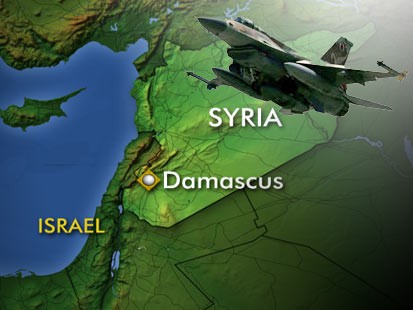
• What did Israel strike?
• Why isn’t Syria commenting on the attack?
• Why aren’t the U.S. and Israel commenting on the strike?
• Why aren’t other Middle Eastern states complaining?
After much analysis, I have come to a new conclusion: there is only one theory that answers all the questions in a suitable way. Syria was developing a nuclear reactor based on North Korean technology, most likely for weapons purposes.
To answer the questions:
What did Israel strike at?
Syria’s nuclear reactor, obviously.
Why isn’t Syria commenting on the attack?
Syria could be compared to small boy, caught in the act of cheating on the test. They don’t want to say anything to their friends because they’re embarrassed.
Why aren’t the U.S. and Israel commenting on the strike?
This is where it gets complicated. Normally, you’d think Israel and the U.S. would use this extensively as a P.R. tool against Syria, Iran, and basically all radical Middle Eastern countries in general. But they’re not.
This actually makes perfect sense if you think about it. North  Korea’s image is a huge part of its foreign policy. This is semi-understandable if you think about Kim Jong-Il. He’s very concerned about his image, which makes sense, once you remember he’s a fat midget with a funny hairdo (not to offend any fat midgets with funny hairdos out there, of course!). Anyway, North Korea takes its image very seriously. Any offensive name calling by Japan is taken as a declaration of war. Just kidding. Writing about fat midgets puts me in a lame-geopolitical-joke mood.
Who cares if North Korea’s got self-image problems anyway, right? Well, right now, we care, a lot. Christopher Hill just pulled through with one of the greatest successes of the Bush administration and North Korea is disabling its nuclear program. Any announcement of a Syrian nuclear program, aided by North Korea, could seriously piss off North Korea.
Yes, it is true Kim Jong-Il knows what’s going on in Syria. But as long as the U.S. doesn’t make any public statements concerning the nuclear program, the midget stays happy.
Why aren’t other Middle Eastern states complaining?
This is pretty interesting as well. The other states of the Middle East – Saudi Arabia, Iraq, and probably even Shiite Iran don’t mind a rival nuclear program taken down by the Israelis. Of course Iran is taking this as a serious threat, but in some ways, this attack was not an unforgivable move by ‘The Great Satan’.
Other great Syria-Israel analysis:
Security Dilemmas
Foreign Policy Watch
Middle East Analysis
Beyond the Cusp
Attending the World
Yup, that is just an awesome picture for no reason.
Tuesday, October 09, 2007
Turkey Threatens to Invade Iraq, Destabilize the Whole Region - A Brief History of the PKK
As the United States works towards peace in the Middle East, one country is threatening stabilization. Who? One of America’s greatest allies: Turkey.
The ruling Turkish party, the AK Party, said it would request the Turkish Parliament’s authorization for a ‘major incursion’, according to Reuters.
The government there has come under increasing pressure, as the PKK rebel group has stepped up its attacks in the country. A brief history lesson
The PKK, or the Kurdistan Workers Party, is a Kurdish nationalist group listed as a terrorist organization by a number of states and organizations, including the U.S., NATO, and the E.U. The PKK’s goal is an independent, socialist Kurdish state encompassing northern Iraq, south east Turkey, west Iran, and parts of north east Syria. It has no qualms against using violence to obtain its objectives.
Turkey has a large minority of Kurds, who feel that they have been treated as second-rate citizens since the creation of modern Turkey in 1923. The PKK has fought a deadly guerilla war since the 1970s that has claimed over 37,000 lives.
Around the year 2000, following the capture of its leader, the PKK suspended military operations and called for a truce. This truce ended in 2004, and since then, the paramilitary group has increased the ferocity and frequency of its attacks.
Oct 7: PKK fighters killed 13 Turkish soldiers, including 1 officer, after Turkish soldiers shot dead a suspected PKK fighter earlier in the day.
Jun 13: 4 Turkish soldiers killed in multiple attacks.
Jun 10: A bomb in Istanbul wounds 14 Turkish civilians. The PKK is suspected. Jun 7: 3 Turkish soldiers are killed by a PKK landmine.
Jun 4: A PKK suicide bomber kills 8 soldiers and wound 6 at an army checkpoint.
May 22: A suicide bombing hits Ankara killing 9 and wounding over 100. While no one claims responsibility the PKK is blamed by the government.
The effects of a Turkish invasion
Obviously, a Turkish invasion would be destabilizing, especially with the size of the incursion Turkey is currently considering. It is worth taking into consideration that Turkey would like to see a powerful central government in Iraq to keep the Kurds and the PKK under control. It is also important to note that an invasion would most likely be most disruptive in the Kurdish region, where it is already peaceful, which means it would most likely not inflame Sunni-Shia tensions.
What should Turkey do?
It is in Turkey’s best interest to invade, but in the worst interests of the Bush Administration. A Turkish invasion would be a huge setback for the Administration. Sadly, there is very little the U.S. can do to stop Turkey. They have been a very close ally, but since the Iraq war, relations have cooled. Not so much as that the U.S. has no influence over what goes on in Turkey, but the Bush Administration has already spent the last 3 years trying to stop Turkey from sending in troops. If Turkey and its new president have decided they finally want to go and attempt to wipe out the PKK, the U.S. may be unable to stop them.
Monday, October 08, 2007
On Torture 2.0
I wrote this over a year ago, when I got around 1 hit a day (and that was probably from my IP). It was the third post ever. Since then, my writing has improved drastically (you like the big words?) thanks to blogging.
Some of it's points don't apply today, but much of it does:
Although torture is meant to keep the United States of America safe, it does not always have that effect. Sometimes, in dire emergencies, torture may be necessary. Usually, this is not the case. President Bush does not agree with this. He thinks that torture is necessary to prevent another terrorist attack. While the President believes that, others, who have been in the military, including Republican Senators John McCain, John Warner, and Lindsey Graham, have the opposite view on interrogation techniques. Both sides have proposed a bill. The senate bill, which was approved by the Senate Armed Service Committee (led by McCain, Warner, and Graham), is not much better than the President's bill. It would allow the President to have the final word on torture. If he wanted to torture a detainee, he would NOT have to make his intentions public.
The effects of torture are worse than the information gained from it, excluding extreme cases. If the United States tortures prisoners, other countries will too. This puts the United States' soldiers in Iraq and Afghanistan in danger. Tortured POWs often give false information to receive better treatment. One well known case Ibn al-Shaykh al-Libi, a terrorism suspect, 'admitted' that Iraq and Al-Qaeda were connected so he would not be tortured by the Egyptians. Countries become less trustful, creating weaker treaties. Besides that, the U.S. agreed to the Geneva Conventions. Bush has no right to decide that he can just over rule the agreement. Mistreating captured enemy combatants is morally wrong, and diminishes how the world looks at the U.S. Even for people who donÂ’t believe in any God must agree that torture is wrong. A watered down version of the McCain bill, or even better, a new bill, must be passed in Congress if the United States is to regain its image of fairness and the soldiers of the United States are to remain safe.
Thursday, September 20, 2007
Timeline: Anti-Syrian Lawmakers Assasinated

June 13, 2007: Walid Eido, 65, an anti-Syria member of Parliament, is killed along with his son, two bodyguards, and six others in an explosion in Beirut.
Nov. 21, 2006: Pierre Gemayel, 34, the industry minister and a prominent anti-Syria Christian politician, is shot to death by gunmen in a Beirut suburb.
Dec. 12, 2005: Gibran Tueni, an anti-Syria newspaper editor and lawmaker, is killed when a car bomb destroys his vehicle.
June 21, 2005: Anti-Syria politician George Hawi, a former Communist Party leader, is killed by a bomb placed under his car.
June 2, 2005: Anti-Syria journalist and activist Samir Kassir is killed by a bomb planted under his car.
Feb. 14, 2005: Former Prime Minister Rafik Hariri, an anti-Syria lawmaker, is assassinated in a bombing that also kills 20 other people. Among the dead is Bassel Fleihan, who served as economy minister in Hariri's government. The opposition blames the Syrian and Lebanese governments, charges both deny.
SOURCE: Associated Press
Thursday, September 13, 2007
Hezbollah - Not North Korea
Israel strike on Syria? Yup.
North Korea supplying Syria with nuclear technology? Nope.
Fox news, along with right-wing extremists (notably John Bolton) are publishing stories and op-eds claiming they have (unidentified) ‘sources’ who tell them North Korea may be supplying Syria with nuclear technology. We find that very unlikely. First, North Korea is just beginning to disclose its nuclear facilities to the U.S. and the U.N, for very large sums of money, oil, and other basic necessities. If North Korea is selling nuclear technology to Syria, Syria would be paying very well. North Korea would not need anything from the U.S. After the North Korean nuclear deal earlier this year, most analysts suspected (for good reason) that North Korea badly needed the aid they were receiving in the deal. North Korea wouldn’t be needing that if they were exporting nuclear know-how.
Second, New deals with the DPRK are being announced every other week it feels like. Kim Jong-Il is giving the impression that he actually wants to shutdown his nuclear program. North Korea has decided to allow American, Russian, and United Nations inspectors to visit the Yongbyon plant.
Third, there are better explanations. It is more likely that Israel was either testing Syria’s defense capabilities, or destroying Syrian arms headed towards Hezbollah. Our bet is on the second.
No matter what the reason was – nukes, defense testing, or to destroy arms – Stat and I are back Israel’s maneuvers. A nuclear Syria would be nearly as disastrous as a nuclear Iran. While we would be back the operation less if it was only a test of Syrian defenses, Syria is still a very dangerous, terrorist-supplying dictatorship. And if our guess is correct, and the strike was to destroy weapons headed towards Hezbollah or terrorists in Iraq, we here are happy that the Israelis took the matter in to their own hands.
Monday, September 10, 2007
A New Strategic Objective in Iraq
As the British withdraw from Basra, we here in America are struggling to find a way to meet our goals in Iraq.
There have been many proposed solutions, but there are no good options; each plan to fix or to get out of Iraq contains serious flaws.
Our strategic objective in Iraq since the start of the war has been to create pro-American coalition government in Baghdad. The original Rumsfeld plan was to go in, create some degree of stability while training the Iraqis to pacify Iraq. We would then withdraw leaving the rest of the nation building to the Iraqis.
It didn’t work.
The options
We now have 3 options available. The first is to maintain the current strategy. This is the Bush Administration’s point of view. The second is a rapid withdrawal of forces, a position held by a fairly small group mostly on the left. The third is to start a phased withdrawal, beginning sometime in the next few months and concluding when circumstances allow. This is the consensus among most moderate Democrats and a growing number of Republicans. All three options, however, suffer from fatal defects.
Bush’s plan for staying the course makes very little sense. We have tried this option for 4 years now, and it has not been successful. As they say, trying the same method twice and expecting different results is the definition of insanity.
But there is an argument for this case. The Bush Administration, as do the plan’s supporters, argue that this plan should continue indefinitely in order to avoid a more dangerous outcome: an Iranian controlled Middle East.
There is no question that if the U.S. were to withdraw, there would be a major power vacuum in the Middle East. Who else to fill that vacuum but Iran? Saudi Arabia does not have the military might to stand up to Iran.
But you must consider the defects of this approach. The army is near the breaking point and morale is low at home. The cost of this approach, in money and lives, will continue to rise.
The second option is a phased withdrawal. This appears to be the most reasonable, moderate proposal. But consider this: if the mission were to remain the same – fight the insurgents and train the Iraqi army in order to increase security – then we would be doing the same job with fewer troops, and still maintaining casualties. Fewer casualties, but nevertheless American injuries and deaths.
Only under a different strategic goal would phased withdrawal make sense. Most likely, that redefined goal would be dealing with Iran. But under the same strategic goal the U.S. has been pursuing since the start of the war, phased withdrawal is the least defensible strategy.
Championed by presidential candidate Bill Richardson, the third option is an immediate pullout. If we are to withdraw, this plan would be more attractive than a phased withdrawal; it achieves the same ends without the casualties.
The flaw of this strategy is that it opens the door for Iran to dominate Iraq. The only power in the region that could have any chance of stopping the Iranians is the Turks, and Turkey has no problem with a controlled Kurdish population.
Sunnis, Kurds and even some Shiites would resist Iran. But Iraq is much more important to Iran than it is to the U.S., and the authoritarian Iranian theocracy has a much higher pain resistance than the U.S.
The situation would be an extraordinary opportunity for the Iranians; they would be knocking on Saudi Arabia’s door. The Saudis don’t have the military might to stop Iran, and Saudi Arabia could be forced into a political agreement with the Iranians. Iran could even influence Saudi oil. The whole Arabian Peninsula would be threatened.
All three conventional options, therefore, contain serious flaws. Continuing the current strategy pursues an unattainable goal. Staged withdrawal exposes fewer U.S. troops to more aggressive enemy action. Rapid withdrawal quickly opens the door for possible regional Iranian hegemony -- and lays a large part of the world's oil reserves at Iran's feet.
Changing the objective
We have three approaches, each with imperfections. The solution is to change the strategic goal.
The obvious choice for America’s new objective is the prevention of an Iranian hegemony. Besides creating a stable, pro-American government in Iraq, what is in our national interest in the Middle East? To stop anti-American forces. Expanded Iranian power will not help American interests in the Middle East or around the globe.
The U.S. cannot control the populace of Iraq. The U.S. has never been a great counterinsurgency force, but we remain a great conventional force. Therefore, we still have the ability to stop Iran. We could position our forces in Saudi Arabia, but the last time that happened, we helped sparked the rise of Islamic terrorism. The best remaining areas are Kurdistan and Kuwait.
Residual U.S. forces would be left in Kurdistan and Kuwait to keep Iran under control. This would allow for a rebuilding of the military and a reduction of American casualties.
Since all three conventional options are flawed, this is the only way out. We leave on our own terms, with fewer casualties, with our national honor. We would have a chance to rebuild the military, and a chance to salvage our interests in the Middle East.





 AIM
 del.icio.us
 Digg
 MyBlogLog
 Netscape
 StumbleUpon
 Technorati


