BBC: Livni claims victory in Israeli vote
This is great. Livni, by far, seems like the smartest, most rational of the candidates presented to Kadima voters. However, the fight is not yet over: early parliamentary elections could mean far right leader Benjamin Netanyahu could take power. This would be disastrous. Netanyahu has a record of being a hardliner not willing to make compromises.
I'll try to elaborate more tomorrow.
Showing posts with label Israel. Show all posts
Showing posts with label Israel. Show all posts
Wednesday, September 17, 2008
Rationality Wins in Israel


Tuesday, June 24, 2008
Prisoner Swap with Hezbollah, Truce in Gaza - Rumblings in the Middle East
CNN: Israeli Cabinet to consider swap with Hezbollah
BBC: Rockets ‘violated Gaza ceasefire’
Reuters: More indirect Israel, Syria talks in July
Background
Israel has been negotiating on two and a half fronts recently. The first front is in the Palestinian territories, but specifically with Hamas in Gaza. The second and a half negotiations were with Hezbollah/Lebanon along with Syria.
Negotiations with Hamas have been ongoing since the 2006 abduction of Israeli soldier Gilad Shalit and after the 2007 coup in which Hamas ousted its rival Fatah and took over the Gaza Strip. The eventual result was a ceasefire for Gaza which began Thursday. No one expected the truce to last long, however. That assertion was only confirmed today when Islamic Jihad militants launched rockets into southern Israel in retaliation for an Israeli air strike in the West Bank, which, if you don’t remember, is not part of the truce.
The second front has been much more interesting, not to mention more peaceful (albeit just for now, but we’ll get into that later). Israel and Syria have finally gotten around to having negotiations over the disputed Golan Heights that Israel captured in the 6 Day War. The talks, which are being mediated by the Turks, have not been completely endorsed by the U.S., which has complicated things, and even led one Israeli general to declare that there will be no deal with Syria until George Bush is out of office.
On the other half of that negotiating front is Lebanon and Hezbollah – Israel has opened up negotiations with both. Why include Lebanon/Hezbollah and Syria together? There can be no peace between Israel and Syria without involving Lebanon and Hezbollah, and there can be no peace between Israel and Hezbollah without involving Syria. Besides, Syria still has de facto control over many parts of the country. This is for many political, religious, and economic reasons, but it is also because Syria has a big hand in the actions of Hezbollah. Well, it appears Syria has given the go ahead for some peace between Israel and Hezbollah: a prisoner swap. Two soldiers captured in 2006 by Hezbollah would be traded for a rumored five Hezbollah guerrillas.
So, to sum up an unnecessarily long background:
- Israel is negotiating with Hamas for peace in Gaza and the return of a captured soldier
- Israel is negotiating with Syria over a peace agreement on the Golan Heights
- Israel is negotiating with Hezbollah, which is supported by Syria, for the return of two captured Israeli soldiers
Peace in Gaza
One thing not mentioned above was the almost imminent incursion that would have surely taken place if it hadn’t been for the ceasefire. Rocket fire had gone on for far too long without the Israeli government truly responding for most Israelis tastes. Therefore, Israel should take this truce as an opportunity to do three things: (a) prepare its military, if necessary, for an incursion; (b) bolster Fatah in the West Bank; (c) open up final peace negotiations with Hamas. If those negotiations failed, and rocket attacks resumed, options a and b would be ready for retaliation against Hamas
Peace in Lebanon
The prisoner swap should go through, and the United States needs to endorse a peace deal between Syria and Israel. Peace is in the interests of all the above countries – Israel would like peace and its ruling politicians any victories; a deal on the Golan Heights has been said to be the ‘number one foreign policy issue’ for Syria; and a peace deal between Israel and Syria would undermine American archenemy Iran.
Political turmoil in Israel
The ruling coalition in Israel has been hit by a number of corruption scandals. Early elections seem likely. However, early elections could put more extreme parties, including the Likud party of right wing hardliner Benjamin Netanyahu. Any successes in Lebanon, Syria, or the Palestinian territories would greatly bolster the current, moderate administration. That would be in our best interests.
Monday, June 02, 2008
Syria to Allow IAEA Inspectors
Reuters: Syria to let in U.N. nuclear investigators: ElBaradei
Background
This comes, in case one doesn’t remember, after last year’s mysterious bombing by Israel of an even more mysterious Syrian facility, which some in the West, including the United States, believe was a nuclear facility. Of course, Syria denies this charge. Another interesting point that should be known is that this comes in the middle of Israeli-Syrian negotiations.
Good idea
The Reuters article reports that officials from the IAEA (the U.N. nuclear watchdog) will be visiting not only the site that was bombed, but also 2 or three other sites. Interesting…
Anyway, this can only be a good thing, as long as the IAEA does its job thoroughly.
Wednesday, April 23, 2008
Will Israel Trade the Golan Heights for Peace with Syria?
BBC: Israel ready to return Golan Heights to Syria
Background
The Golan Heights is an a mountainous region in north east Israel that the Jewish state captured in the 1967 Six Day War from Syria and successfully defended in the 1973 Yom Kippur war. A portion of the land was returned to Syria in later years.
There has long been talk of eventual Israeli return of the land to Syrian control in exchange for peace. Indirect talks mediated by Turkey have picked up pace recently.
Recent events
There have been several recent events that are very interesting.
1. The bombing of Syria’s supposed nuclear reactor
2. North Korean nuclear progress
3. Congressional briefing on possible Syrian-North Korean nuclear ties
4. Syrian military on alert
5. Israeli military on alert
6. The assassination of Imad Mughniyeh
Last September, Israeli jets bombed a building in Syria. The event was completely surrounded in mystery, with many leaks and sources pointing to the conclusion that the building was a nuclear facility. Other facts indicated Syria got this technology from North Korea. A select group of Congressional officials is being briefed on that possibility today, with all leaks saying the answer was yes.
Months later, Imad Mughniyeh, a top ranking Hezbollah official, was assassinated. The likely culprit: Israel. Then, even more recently, both the Israeli and Syrian militaries were put on alert. Some analysts believed Israel was watching for a Hezbollah assassination, and Syria was just being careful. More interestingly, rumors swirled about another Israel-Syria war.
Was this Israel’s attempt at preventing a conflict? Prime Minister Olmert already suffered through one unpopular war in Lebanon in 2006; it’s unlikely he’d survive another war.
Anyway, where does Syria’s nuclear reactor fit in? Well, the timing of the briefing and of Israel’s extension of the olive branch cannot be any coincidence. Syria could be forgiven for its nuclear crime as part of the deal.
What should we do now?
Israeli return of the Golan Heights for peace does not sound like a bad idea for either side. If Israel can juice the thing for everything its worth, I’m sure we could convince Syria to disassociate itself with Iran, or to some degree.
Sunday, March 23, 2008
Retaliation for Imad Mughniyah Assassination Soon?
Reuters: Hezbollah commander hailed as a martyr
Background
Imad Mughniyah was Hezbollah’s military commander that was the mastermind of several of Hezbollah’s most successful operations starting in the 1980s. He was on the most wanted list in both the U.S. and Israel. February 12 he was assassinated via car bomb. No one has claimed responsibility, though Hezbollah blames Israel’s Mossad, the equivalent of the Israeli CIA. A 40 day mourning period then began, and is set to end tomorrow, when Hezbollah leader Hassan Nasrallah is expected to address thousands of followers at the event in Beirut's southern suburbs.
Will Hezbollah retaliate for the killing?
It is quite possible Hezbollah will retaliate. In 1992, after the Israeli assassination of Hezbollah leader Sayed Abbas al-Musawi, Hezbollah attacked the Israeli embassy in Buenos Aires, Argentina. Now that the 40 day mourning period is over, and Hezbollah cells have had time to collect information and to prepare for an attack, an incident is very likely.
Another all out Lebanon war?
Unlikely. The war conducted in the summer of 2006 was a huge failure for Israel. They are not likely to make the same mistake twice. Consider, as well, that they are bogged down fighting Hamas in the Gaza Strip.
Anything the U.S. or Israel can do?
Stay alert, number one. Number two, don’t overreact. We don’t need another war in Lebanon.
Wednesday, February 13, 2008
Who Killed Imad Mughniyeh?
A quick list of possibilities:
1. The Mossad
Motive: Revenge; to stop him from carrying out any more attacks.
2. The CIA
Motive: Revenge; to stop him from carrying out any more attacks.
3. A rival Hizbollah member
Motive: To move up on the Hizbollah political ladder.
Stay tuned for more.
Monday, January 28, 2008
Hoping That Arab Governments Are Blamed
On Wednesday I wrote “Hoping Hamas is Blamed.” It’s pretty obvious now, just as it was then, that Hamas isn’t going to be blamed and Israel’s plan will not succeed. Luckily, a new possible scapegoat has joined the herd – other Arab governments.
The predicament
Egypt’s been left with quite a problem; Hamas will not allow the Egyptian government to shutdown the border peacefully. That leaves them with essentially two options.
Option number one of the Egyptians is to shut their border with Gaza down by force. The problem with this, in their view, is that it (a) possibly destabilizes the region (b) infuriates relatives of Palestinians in Egypt.
Option number two is allowing continued free passage between the Gaza Strip and Egypt. This would upset Israel and the U.S. As well, it could draw the ire of many Egyptians if Gazans become perceived as unwelcome guests.
A new scapegoat
Unless Gazans point their fingers at Hamas in retaliation for their poor situation, there is another group they blame: the Arab League.
The Arab League held an emergency meeting yesterday to try to solve the current crisis. If the group of states publicly pushes for a closing, there is a chance (albeit a small one) that the League will be blamed.
It’s unlikely
Don’t get your hopes up. Going on current sentiment towards the West in the region, and looking at past experiences, it is almost certain Israel and the U.S. will take most of the Gazans anger.
Moving forward
And more anger is not what we need. Anger will only sponsor more terror, not help fight it. We need to come up with a plan that will get the support of the Palestinian people. Only then will Hamas lose popular mandate, and will a solution be found.
Wednesday, January 23, 2008
Hoping That Hamas Is Blamed
Reuters: Palestinians blow up border wall, flood into Egypt
Well, it had to happen sometimes. And its too late to change course.
Israel’s strategy
Israel has been attempting to isolate Hamas and make their government in Gaza look like a failure. Israel, the U.S., and other western powers have been bolstering Mahmoud Abbas’s (semi-)democratic government in the West Bank to solidify this image.
The mistake of the strategy – or not?
Israel has been making life in Gaza miserable for Gazans, and life will only become exponentially worse in the following weeks and months.
By increasing poverty, unemployment, and general dissatisfaction in Gaza, the West is creating the perfect situation for terrorism to grow. Terrorism is like a disease: it grows on dissatisfaction. Israel and the United States will be blamed for the bad conditions.
Unless, of course Israel and the West aren’t blamed, and instead, the Hamas government is. That is the Ehud Olmert’s hope, at least.
It’s too late now
This blockade and isolation has been going on for months, and it is too late for a quick reversal. The only thing we can hope is that Prime Minister Olmert is right, and the Hamas government is blamed instead of the West, because truly, in reality, it is Hamas’s fault.
Tuesday, November 27, 2007
The Annapolis Conference: More Hurtful Than Helpful?
Yes, then Israelis and Palestiians appear to be finally making some progress. But it is hard to be optimistic. Beyond the Cusp (a fantastic blog/blogger) takes a cold, hard look at reality. What happens if Annapolis does succeed? He goes on to make 3 main points:
1. Implementation of the agreement would be extremely difficult
2. Once Israel withdraws from the Palestinian territories (which will be certainly part of the agreement), Hamas will take power from Fatah and declare any agreement invalid.
3. If the agreement appears unsuccessful, Iran and/or Syria could take advantage of the situation and could possibly invade Israel, leading to a regional war.
Hits the nail on the head.

Thursday, October 18, 2007
Israel's Syrian Target Was Nuclear: The One Theory That Answers All the Questions
After the September 6 Israeli strike on Syria, I concluded that my ‘bet [on the reason for the Israeli strike] is on destroying Syrian arms headed towards Hezbollah’. Although the majority of those polled agreed with me at the time that North Korea was not giving Syria nuclear technology, I might be forced to retract that view as I write this post.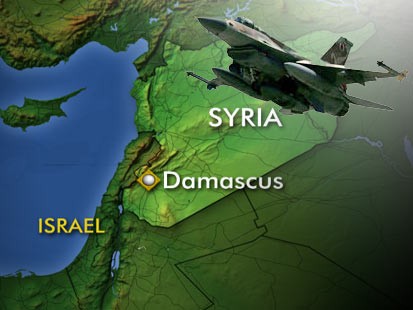
• What did Israel strike?
• Why isn’t Syria commenting on the attack?
• Why aren’t the U.S. and Israel commenting on the strike?
• Why aren’t other Middle Eastern states complaining?
After much analysis, I have come to a new conclusion: there is only one theory that answers all the questions in a suitable way. Syria was developing a nuclear reactor based on North Korean technology, most likely for weapons purposes.
To answer the questions:
What did Israel strike at?
Syria’s nuclear reactor, obviously.
Why isn’t Syria commenting on the attack?
Syria could be compared to small boy, caught in the act of cheating on the test. They don’t want to say anything to their friends because they’re embarrassed.
Why aren’t the U.S. and Israel commenting on the strike?
This is where it gets complicated. Normally, you’d think Israel and the U.S. would use this extensively as a P.R. tool against Syria, Iran, and basically all radical Middle Eastern countries in general. But they’re not.
This actually makes perfect sense if you think about it. North  Korea’s image is a huge part of its foreign policy. This is semi-understandable if you think about Kim Jong-Il. He’s very concerned about his image, which makes sense, once you remember he’s a fat midget with a funny hairdo (not to offend any fat midgets with funny hairdos out there, of course!). Anyway, North Korea takes its image very seriously. Any offensive name calling by Japan is taken as a declaration of war. Just kidding. Writing about fat midgets puts me in a lame-geopolitical-joke mood.
Who cares if North Korea’s got self-image problems anyway, right? Well, right now, we care, a lot. Christopher Hill just pulled through with one of the greatest successes of the Bush administration and North Korea is disabling its nuclear program. Any announcement of a Syrian nuclear program, aided by North Korea, could seriously piss off North Korea.
Yes, it is true Kim Jong-Il knows what’s going on in Syria. But as long as the U.S. doesn’t make any public statements concerning the nuclear program, the midget stays happy.
Why aren’t other Middle Eastern states complaining?
This is pretty interesting as well. The other states of the Middle East – Saudi Arabia, Iraq, and probably even Shiite Iran don’t mind a rival nuclear program taken down by the Israelis. Of course Iran is taking this as a serious threat, but in some ways, this attack was not an unforgivable move by ‘The Great Satan’.
Other great Syria-Israel analysis:
Security Dilemmas
Foreign Policy Watch
Middle East Analysis
Beyond the Cusp
Attending the World
Yup, that is just an awesome picture for no reason.
Thursday, September 13, 2007
Hezbollah - Not North Korea
Israel strike on Syria? Yup.
North Korea supplying Syria with nuclear technology? Nope.
Fox news, along with right-wing extremists (notably John Bolton) are publishing stories and op-eds claiming they have (unidentified) ‘sources’ who tell them North Korea may be supplying Syria with nuclear technology. We find that very unlikely. First, North Korea is just beginning to disclose its nuclear facilities to the U.S. and the U.N, for very large sums of money, oil, and other basic necessities. If North Korea is selling nuclear technology to Syria, Syria would be paying very well. North Korea would not need anything from the U.S. After the North Korean nuclear deal earlier this year, most analysts suspected (for good reason) that North Korea badly needed the aid they were receiving in the deal. North Korea wouldn’t be needing that if they were exporting nuclear know-how.
Second, New deals with the DPRK are being announced every other week it feels like. Kim Jong-Il is giving the impression that he actually wants to shutdown his nuclear program. North Korea has decided to allow American, Russian, and United Nations inspectors to visit the Yongbyon plant.
Third, there are better explanations. It is more likely that Israel was either testing Syria’s defense capabilities, or destroying Syrian arms headed towards Hezbollah. Our bet is on the second.
No matter what the reason was – nukes, defense testing, or to destroy arms – Stat and I are back Israel’s maneuvers. A nuclear Syria would be nearly as disastrous as a nuclear Iran. While we would be back the operation less if it was only a test of Syrian defenses, Syria is still a very dangerous, terrorist-supplying dictatorship. And if our guess is correct, and the strike was to destroy weapons headed towards Hezbollah or terrorists in Iraq, we here are happy that the Israelis took the matter in to their own hands.
Wednesday, September 05, 2007
Israel's Mistaken Gaza Approach
 Israel is considering a power cut in Gaza in retaliation for a rocket attack that almost hit a kindergarten in a town called Sderot. This may not be the best option, but considering Israel’s current strategy, it could be the best option.
Israel’s current strategy
Israel has been attempting to isolate Hamas and make their government in Gaza look like a failure. Israel, the U.S., and other western powers have been bolstering Mahmoud Abbas’s (semi-)democratic government in the West Bank to solidify this image.
It hasn’t been going so well. Gaza hasn’t been a failure, but it hasn’t been a success either. But because of an international boycott of trade with Gaza, it will be a failure soon. Gaza isn’t getting basic supplies, and Gaza is being torn apart by it.
A power cut would hasten Gaza’s downfall, but it would help to continue to alienate the one group of Palestinians that support’s Israel: the merchants. More on this later.
But if Israel is to continue its current policy, cutting power would be the best choice.
The mistake of the strategy
Israel has been making life in Gaza miserable for Gazans, and life will only become exponentially worse in the following weeks and months.
Basic aid and food is making it into the Palestinian territory, but that’s just about it. Not a lot’s getting in, and less is getting out. An international boycott is preventing trade with Gaza.
By increasing poverty, unemployment, and general dissatisfaction in Gaza, the West is creating the perfect situation for terrorism to grow. Terrorism is like a disease: it grows on dissatisfaction.
The international boycott is hitting Gazan merchants the hardest. They were content (or more content than the majority of Palestinians) selling their goods in Israel. Now, they can’t sell their goods in Israel, or anywhere at all. The one group that once stood by Israel is now receiving the brunt of Israel’s approach. Does that sound smart?
Saturday, June 30, 2007
Tony Blair Becomes Mideast Quartet Envoy
Blair is Mideast envoy for 'quartet'
The whole Palestinian situation has been stuck in gridlock for decades. Could Blair only worsen the situation? Possibly. It's much more likely he will be able to help; his experience with North Ireland and the IRA will be essential.
Any thoughts?
Sunday, March 18, 2007
Don't Touch Those Sanctions!
Israel: Shun new Palestinian government
A unity government formed between rival Palestinian factions was welcomed by Norway and the European Union, but Israeli Prime Minister Ehud Olmert told his Cabinet on Sunday that he would not work with the new coalition. Israel called for international opposition after a Hamas leader said the group retained the
right of "resistance."
If you had a neighboring country run by terrorists, would you be willing to go along with their every whim? Norway has dropped its sanctions against this elected government controlled by terrorists. Sanctions should remain. The almost (if not) civil war in the West Bank is making life horrible for Palestinians. A new government should be elected, and until then, sanctions should remain.
Monday, January 29, 2007
Ceasefire
Hamas, Fatah agree ceasefire: minister
GAZA (Reuters) - Rival Palestinian factions agreed a ceasefire in Gaza effective from 3 a.m. (0100 GMT) on Tuesday, Palestinian Foreign Minister Mahmoud al-Zahar said. Zahar, speaking after talks between Prime Minister Ismail Haniyeh of
Hamas and a senior aide to President Mahmoud Abbas, of Fatah, said the two sides
had agreed to take all gunmen off the streets of Gaza and remove checkpoints.
Peace at last. Peace is the only way forward. Fighting will get everyone nowhere.
Subscribe to:
Posts (Atom)





 AIM
AIM del.icio.us
 Digg
Digg MyBlogLog
 Netscape
 StumbleUpon
 Technorati


